

Foliars
The leaf answers
in hours.
Soil applied nutrition depends on moisture, temperature and biology to become available. A foliar does not. When a tissue test shows a gap at a stage that sets yield, the canopy is the fastest way in.

Timing
Every foliar pass is a growth stage decision.
Corn sets its yield components in a narrow window. Spraying the right nutrition a week late is the same as not spraying it.
-
V4
Kernel rows set
The plant decides ear girth. Early stress here cannot be recovered later.
Biology and trace nutrition -
V8
Rapid growth
Demand climbs faster than roots can supply. This is where hidden hunger shows in tissue tests.
Carbon and micronutrients -
VT
Tassel and pollination
Kernel count is decided in about ten days. Boron and moisture status matter more here than anywhere else.
Full foliar stack -
R2
Grain fill begins
Photosynthesis has to stay high and nitrate has to keep converting to protein.
Conversion support -
R4
Finish
Late season canopy health protects test weight and standability into harvest.
Carbon and trace

Why foliar
Do not guess. Sample, then spray.
A foliar pass is cheap. A foliar pass aimed at the wrong nutrient is just cheap and useless.
Tissue analysis tells you what the plant has already accumulated. Sap analysis tells you what it is moving right now, which is usually two weeks ahead of a visible symptom. Either one turns a foliar program from a hunch into a decision.
We would rather you skip a pass we recommended than run one the numbers do not support.
- Nutrition available in hours, not weeks
- Independent of soil moisture and pH
- Rides along with passes you already make
- Low volume, low cost per acre
-
Correct in season
Fix a deficiency in the year it costs you yield instead of on next year's soil test.
-
Support pollination
Trace nutrition in place before tassel, when kernel count is being decided.
-
Hold the canopy longer
Healthier late season leaf area feeding grain fill through August.
-
Fits existing field passes
Compatible with many post herbicide and nutrition passes. Always jar test first.
Featured products
What goes in the tank.
Build the pass around what the sap or tissue test is actually showing.
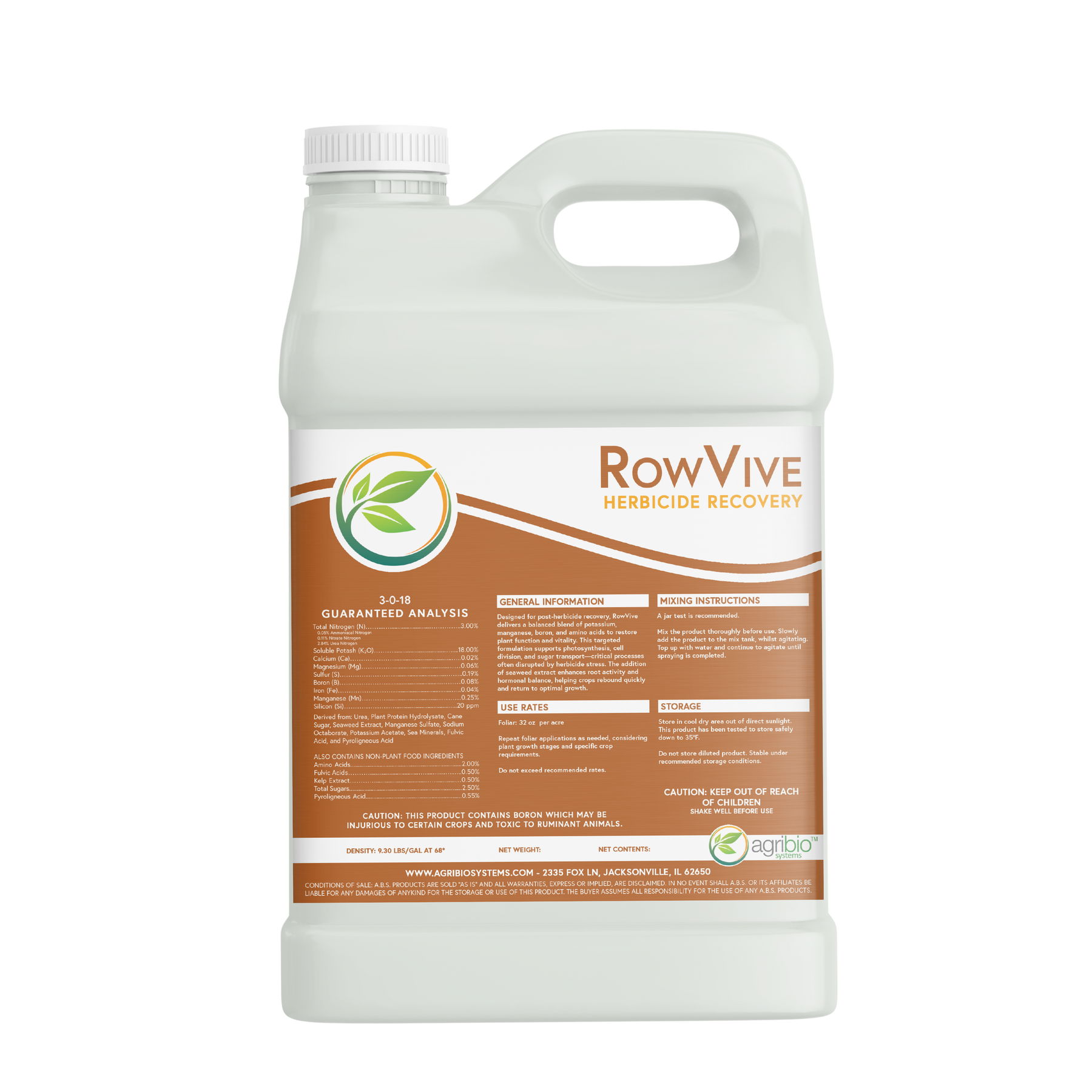
Recovery
RowVive®
Post herbicide recovery and stress response. Potassium, manganese, boron, amino acids and pyroligneous acid to restore photosynthesis and sugar transport after a hard pass.
Product details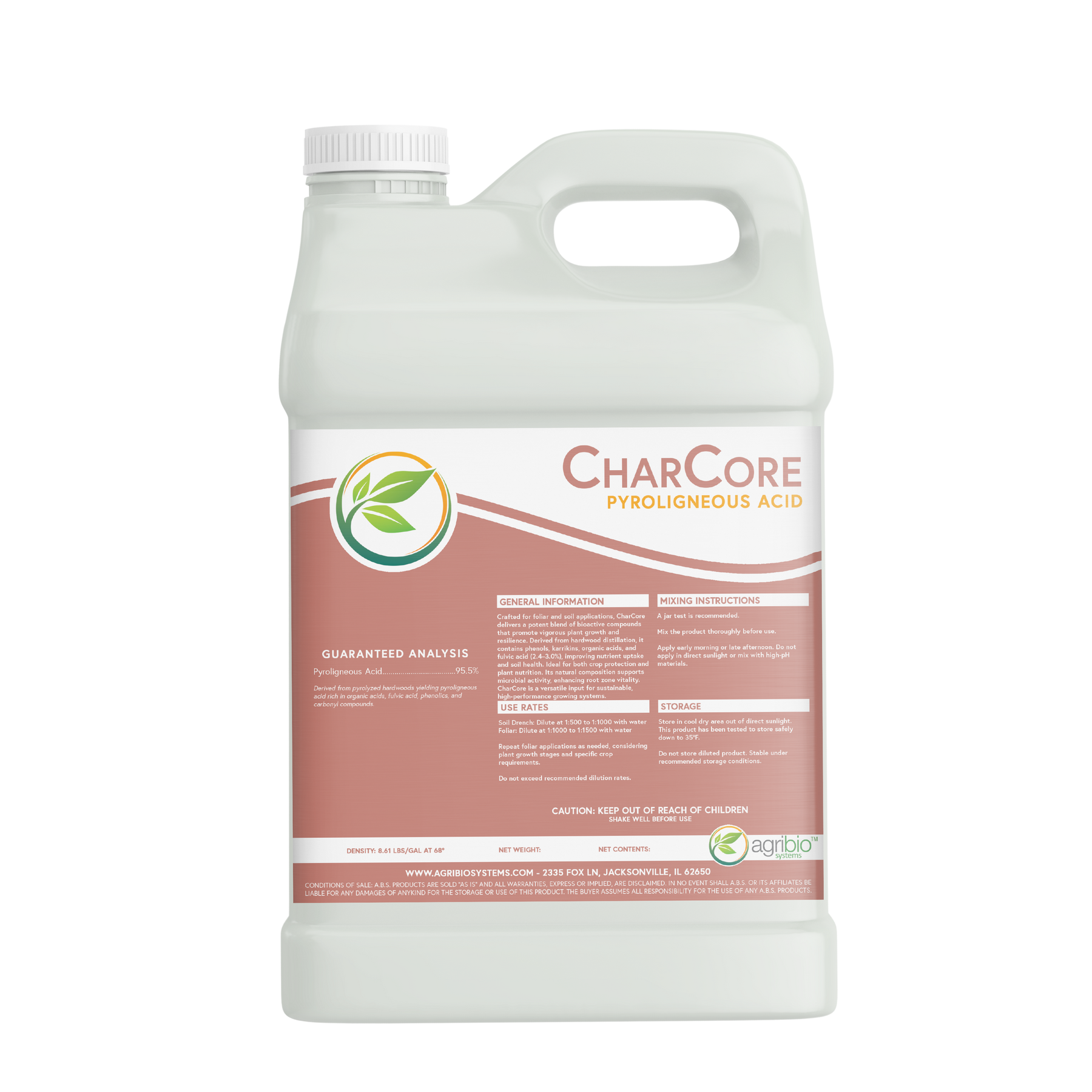
Stimulation
CharCore®
Pyroligneous acid and biological stimulation. Stress mitigation, nutrient efficiency and support for the plant's own defense pathways.
Product details
Ionic sea minerals
Sea-Crop®
More than 90 naturally occurring elements from pristine seawater in a low salinity liquid concentrate. Supports complete mineral balance, nitrogen efficiency and protein synthesis through soil or foliar applications.
Product details
Nitrogen efficiency
MolVic
Molybdenum and fulvic acid for biological nitrogen fixation, nitrogen utilization, nutrient mobility and stress resilience at low use rates.
Product details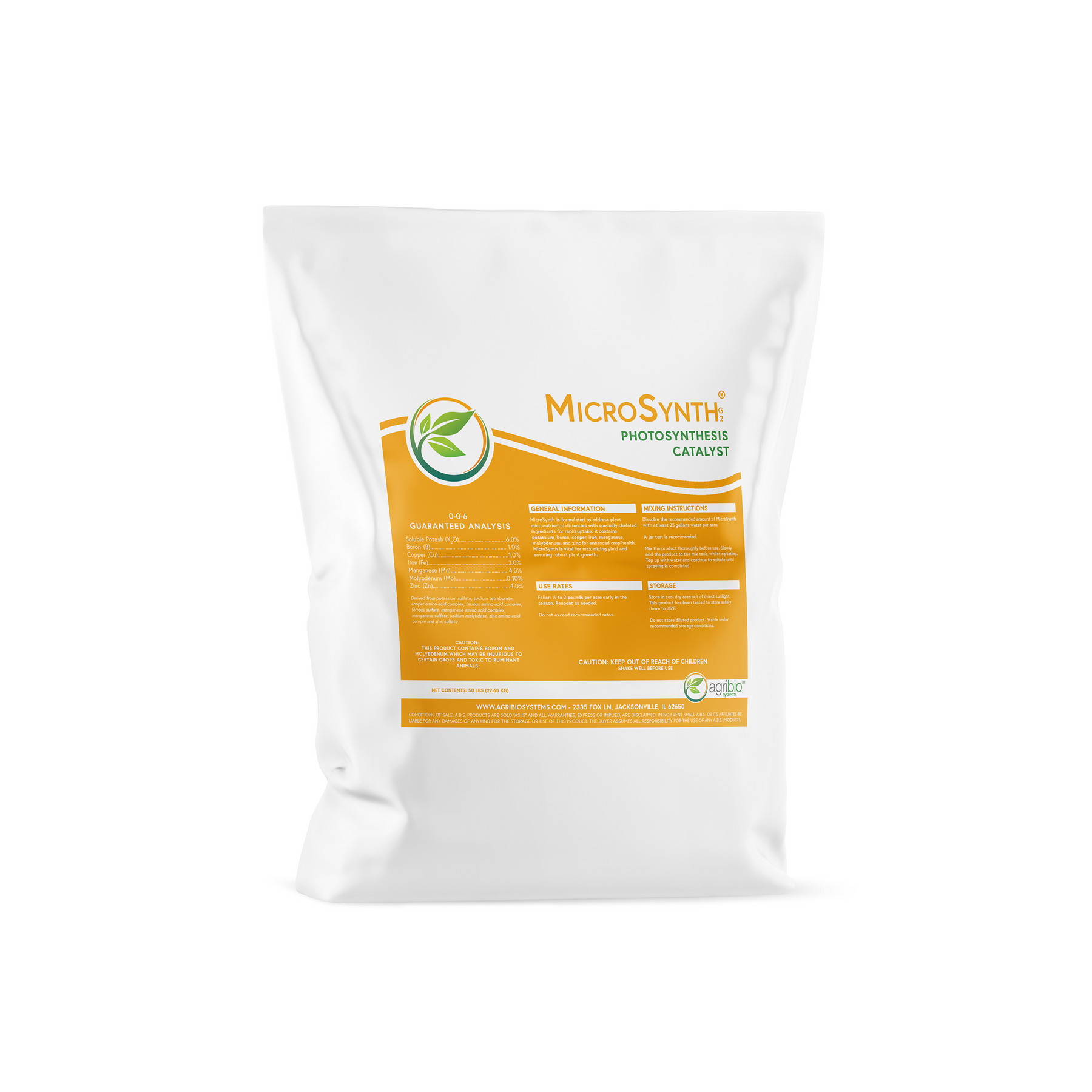
Micronutrients
MicroSynth® G2
A comprehensive micronutrient catalyst for photosynthesis, enzyme function and yield formation. Sold as a dry bag, not a jug.
Product details
Natural plant defense
PhiteMode
A concentrated phosphite formula supplying phosphorus and potassium through foliar or fertigation applications while supporting the plant's natural defense response.
The lineup
Twelve elements a soil test rarely flags.
Plant nutrients are cofactors and building blocks, not filler. A crop short on any one of them cannot finish the job the others started. Every element is available on its own, amino acid complexed rather than EDTA chelated, so a foliar pass can answer exactly what the tissue report shows.
Drag, swipe, or use the arrows. The centered jug grows as you browse.
-
 Boron
B4
Pollination and sugar transport
Boron
B4
Pollination and sugar transport
-
 Calcium
Ca 7%
Cell walls and membrane stability
Calcium
Ca 7%
Cell walls and membrane stability
-
 Cobalt
Co 4%
Nitrogen fixation support
Cobalt
Co 4%
Nitrogen fixation support
-
 Copper
Cu 2.5%
Lignin and cell wall strength
Copper
Cu 2.5%
Lignin and cell wall strength
-
 Iron
Fe 4.5%
Chlorophyll formation
Iron
Fe 4.5%
Chlorophyll formation
-
 Potassium
K 25%
Water balance and sugar movement
Potassium
K 25%
Water balance and sugar movement
-
 Magnesium
Mg 6%
The center of the chlorophyll molecule
Magnesium
Mg 6%
The center of the chlorophyll molecule
-
 Manganese
Mn 8%
Photosynthesis and nitrogen assimilation
Manganese
Mn 8%
Photosynthesis and nitrogen assimilation
-
 Molybdenum
Mo 3%
Nitrate reductase and conversion
Molybdenum
Mo 3%
Nitrate reductase and conversion
-
 Nickel
Ni 2%
Urease activity and nitrogen metabolism
Nickel
Ni 2%
Urease activity and nitrogen metabolism
-
 Silicon
Si 2%
Cell wall rigidity and stress tolerance
Silicon
Si 2%
Cell wall rigidity and stress tolerance
-
 Zinc
Zn 9%
Hormones, enzymes, and internode length
Zinc
Zn 9%
Hormones, enzymes, and internode length
Running it
Spray conditions matter as much as the mix.
Foliar uptake happens while the droplet is still wet. Everything below is about keeping it wet longer.

-
Sample before you plan
Pull tissue or sap at the stage before the one you intend to spray. Build the mix from the result.
-
Spray early or late
Target high humidity and moderate temperature. Midday heat dries the droplet before the leaf can take it in.
-
Use enough water, not too much
Coverage matters, runoff does not help. Follow label carrier volume for the crop stage.
-
Jar test the full tank
Especially with post herbicide or other tank-mix partners. Order of addition changes the result.
Next step
Send us a tissue report.
Email a recent tissue or sap analysis with the crop, stage and field history. We will send back a foliar plan for the next two stages, or tell you the report does not justify a pass.
Next program
The canopy is fed. Now decide what happens to the residue it leaves behind.
Residue Digester